Building Neognostica
The first three versions of this site got deleted. Each one worked fine. None of them felt right.
Version one was a portfolio. Clean grid, case studies, a "hire me" energy that I didn't actually need. Version two was a blog. Headings, featured posts, a subscribe button that nobody used. Version three was the minimal dark-mode thing. White text on black. Monospace font. Felt serious, felt considered, felt like every other developer's personal site from 2024.
All three were templates. I wrote the code myself each time, but they were someone else's idea of what a personal site should be, built with my content dropped into the slots.
Deleting them was easy. I didn't even back them up.
The Filing Cabinet Problem
The obvious problem was identity. Personal sites force you into a visual direction, and that direction becomes you. Your portfolio is the grid. Your blog is the serif font. I'm not one thing, nobody is, and the constraint of committing to a single personality started feeling like the problem itself.
But there's a bigger one underneath.
Websites are still documents.
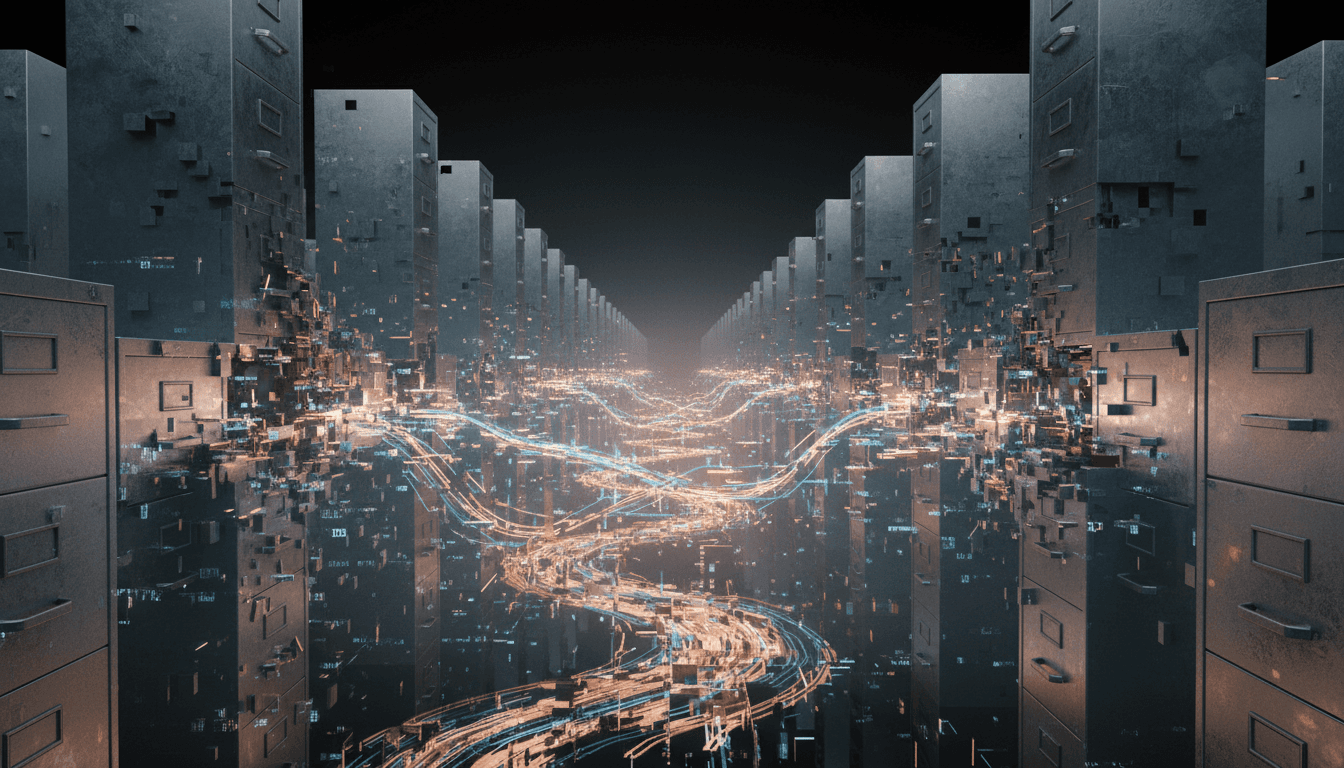
We've spent thirty years making documents look better. Better CSS, better UX, better typography, better animations, responsive layout, dark mode. All of it in service of the same fundamental idea that a website is a page, and a page is a thing you read from top to bottom. I’ve had the opportunity to make the filing cabinet gorgeous, but it's still a filing cabinet.
The web (to me) was supposed to be a medium. A medium can be alive, can respond and generate and shift. A document just sits there.
Toward a Living Medium
Neognostica is an ongoing experiment in what it would mean to take that seriously.
The first question was straightforward enough. What if the same content could behave differently depending on how you choose to experience it? A clean reading surface for when you want typography and nothing else. A visual environment where the screen breathes and reacts. A command line for the kind of person who'd rather type cd words than click a link. Each one a different argument about what browsing should feel like, built from the same content underneath.
The modes are interesting, but they're a mechanism. The deeper question is, what happens when a website starts responding to its own content?
What if a post could grow its own marginalia? What if visual systems could form opinions that the designer didn't predict? What if a site could do things with words, images, and sound that no static page could do, regardless of how well that page was designed?
These are the questions that made the project feel worth pursuing. And they're where AI enters the picture.
What Becomes Possible
Most conversations about AI and creative work circle the same questions. Can it replace the human? Can it write your blog, design your site, generate your portfolio?
But that’s the wrong question. The interesting one is what becomes possible when you stop thinking of AI as a faster human and start treating it as a genuinely new capability, one that lets you do things human effort alone can't sustain.
A concrete example. Every essay on this site can generate its own margin annotations. Tangents that follow threads the text opened but didn't pursue, counterpoints that push back on smoothed-over assumptions, connections to unexpected fields, short poems that respond to the emotional register of a paragraph. No human editor would produce this for a personal blog. The economics make no sense. But an AI can generate a thoughtful margin voice for every post, and the result has no real precedent in any medium. Content that responds to itself.
The procedural visual systems work the same way. Set the parameters for a fluid simulation, feed it mouse input and scroll position or data, and the physics makes compositional choices no designer would have reached through deliberation. Some of those choices are better than what I'd have picked by hand.
These are creative artifacts that require the collaboration between human intent and machine capability to exist at all.
Authorship at one remove. You build the rules. The rules build something that surprises you.
The Unfinished Version
Most of this is aspiration. The site is barely started. The annotations work, the visual modes work, but they only scratch the surface of what responsive, generative design could become. The idea of content that's alive, that generates meaning beyond what the author explicitly put there, is still mostly unrealized.
And I'm good with that. A personal site that feels finished is an author that stopped asking questions.
The web was supposed to be a medium. We've been building filing cabinets. This site is an attempt to build something closer to what the medium was always capable of, now that the tools exist to try.
I don't fully know what it is yet. I'll keep building until it tells me.